The artist who named nothing: Everything you didn't know about Calder

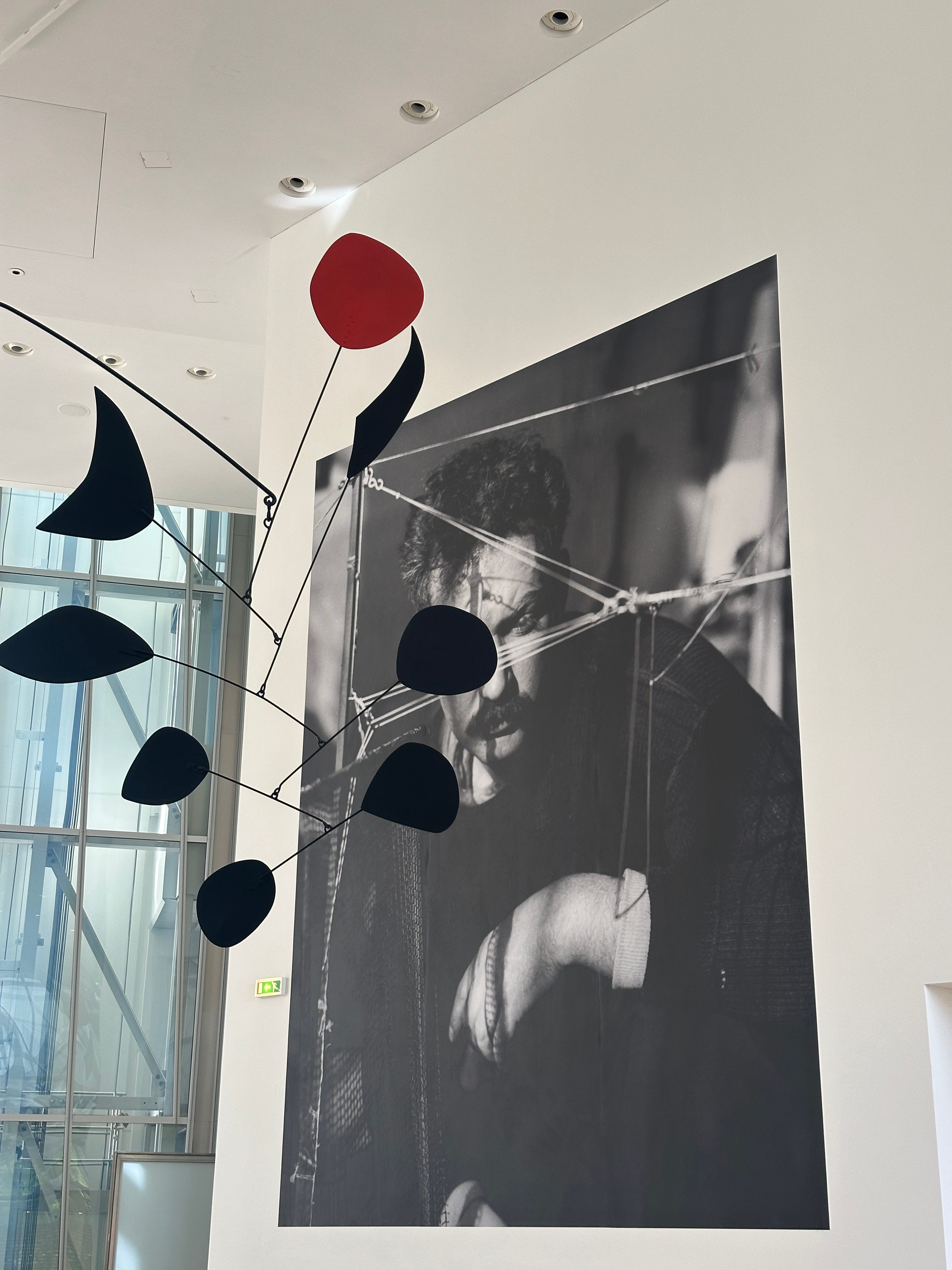
You know the work. You’ve walked past it in airports, stood beneath it in museum lobbies, watched it turn almost imperceptibly in the conditioned air. Those primary-coloured discs, that perfect choreography of balance. Calder’s mobiles have become so woven into the visual fabric of public life that they barely register as art anymore — they register as atmosphere. As furniture or decoration, almost.
Which is a spectacular injustice to one of the most genuinely strange and original artists of the twentieth century.
So I did the ‘crazy’ thing and I took the morning Eurostar from London, spent eight hours in Paris, and came back the same evening. The show runs only until August — why are exhibitions at the Fondation Louis Vuitton always so criminally short? — and my schedule didn't allow anything longer. The only other time I've done something this single-minded for a exhibition was a day trip to Naoshima Island from Osaka, which is at least the kind of pilgrimage that comes with a decent excuse. Both times, it was worth it.
Here is what the show tells us about Calder that we didn’t know:
He was “framed,” not raised
Calder’s own description of his childhood was characteristically wry: “I wasn’t brought up — I was framed.” Born in 1898 into a dynasty of sculptors — father, grandfather, painter mother — the artistic environment wasn’t so much an influence as a total surround.
He initially trained as a mechanical engineer before enrolling at the Art Students League in New York in 1923. His first paid work as an artist was illustrating the Ringling Bros. and Barnum & Bailey Circus for a newspaper. He was drawing the circus before he ever built one.
He invented performance art — and nobody calls it that
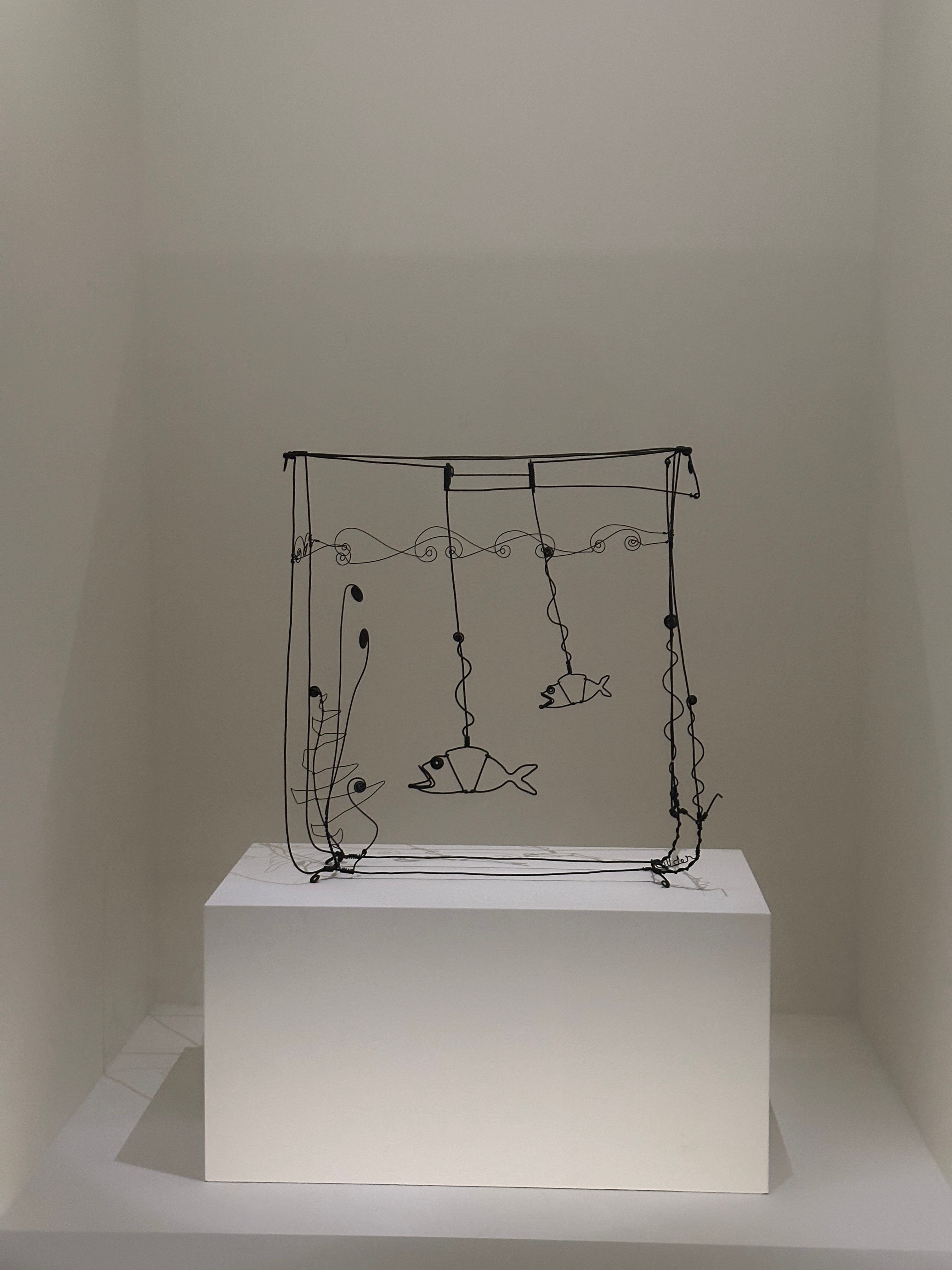
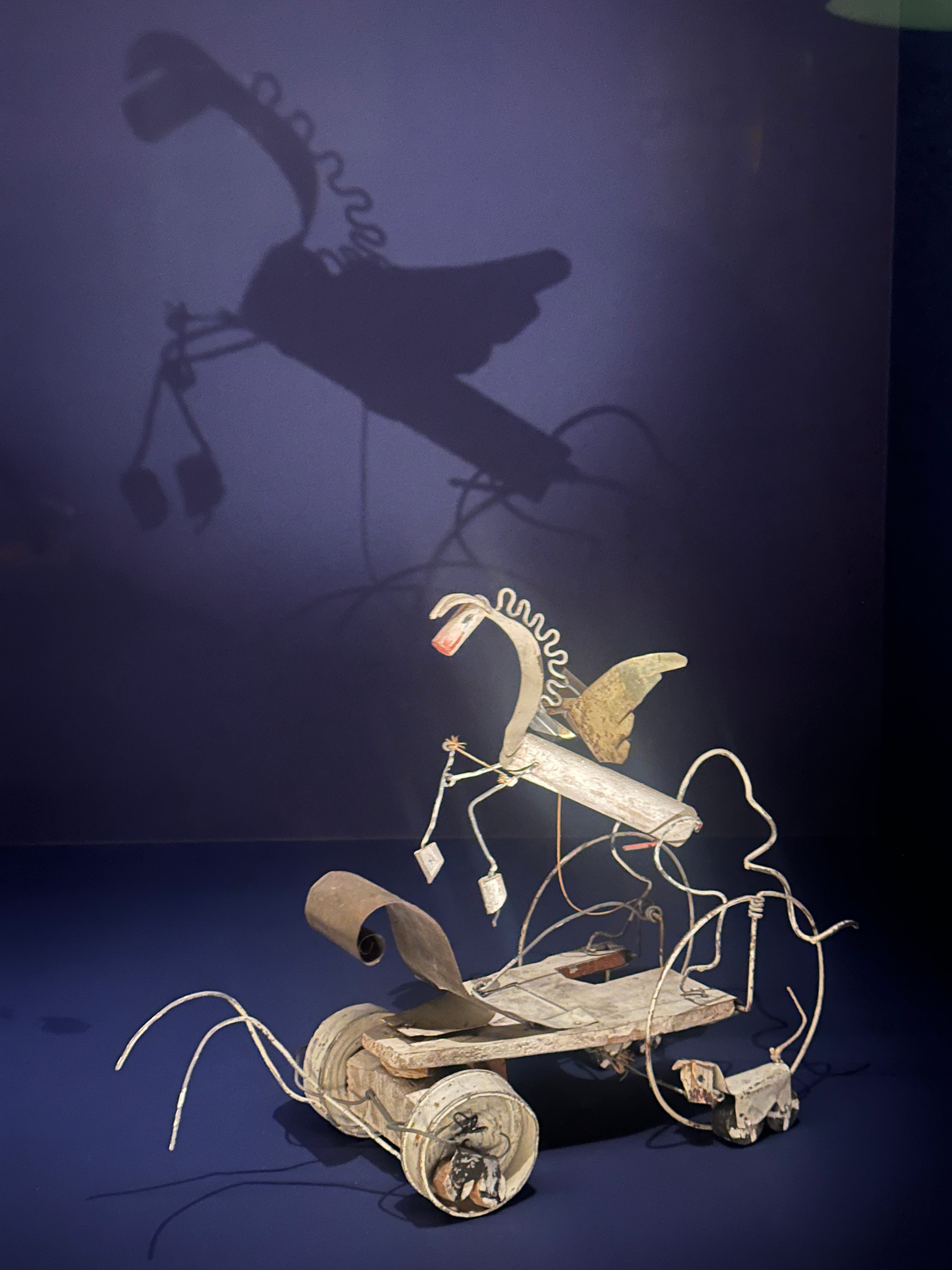
When Calder arrived in Paris in 1926, he immediately began building a miniature circus from wire, cork, cloth, and whatever else came to hand. Over five years it grew to about twenty acts — acrobats, a lion, a tightrope walker — all operated by hand, with a gramophone (sometimes cranked by a young Isamu Noguchi), a tambourine, cymbals, and a cardboard pipe Calder used to make the lion roar.
This was not a toy. It was a performance, staged in salons across Paris, with Calder as ringmaster, sound designer, and puppeteer simultaneously. The audience, on various occasions, included Fernand Léger, Le Corbusier, Marcel Duchamp, Joan Miró, and Piet Mondrian.
The exhibition is admirably direct about what this was: one of the earliest forms of performance as art. Before the vocabulary of “happenings” even existed, Calder was already there — on the floor, in the middle of the room, making the lion roar with a piece of cardboard. It would take the art world another thirty years to catch up.