

Where to find inspiration

This might come as one of the most obvious, basic practices for many people.
But even the most creative of us struggle with inspiration. I have hit the creativity block too many times — when trying to come up with project ideas, show ideas, social media ideas, writing ideas for this Substack, even just ideas for what to do on a rainy Sunday. Feeling inspired gives me this rush that’s hard to describe, but it might be some blend of what it feels like to be slightly tipsy, in love, and full of endorphins after a great workout.
The other day I spent half an hour flipping through design magazines at a newsstand and ended up buying three. I left feeling inspired just by the act itself — which actually led me to the idea of writing this article. The more I thought about what actually gets me inspired, the more random things I came up with.
You’re in good company
It turns out that some of the most celebrated creatives throughout history found their inspiration in exactly the same unremarkable, everyday places we do.
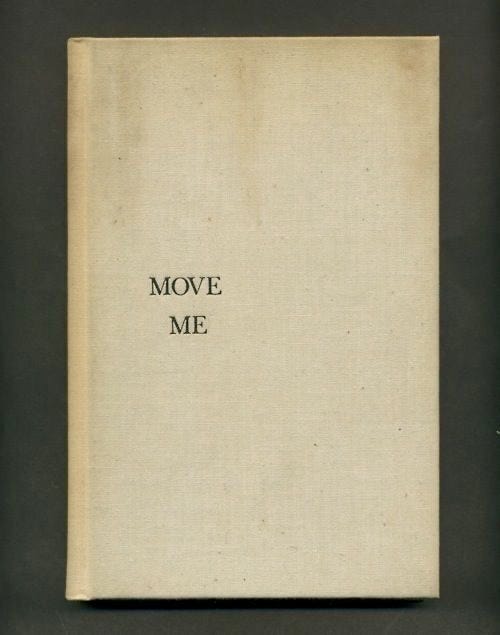
Hemingway famously haunted the bookstalls along the Seine in Paris, browsing titles with no agenda. In A Moveable Feast he wrote about the simple ritual of walking the city when stuck — not going anywhere in particular, just absorbing it. The city itself was the muse.
Kierkegaard composed all of his works in his head while wandering the streets of Copenhagen. Not in a study, not at a desk. Just walking and looking.
Karl Lagerfeld drew inspiration directly from street style and what real people were wearing — his Fall 1991 Chanel collection riffed entirely on hip-hop culture and what he was observing on the streets. For someone running one of the most elite fashion houses in the world, the source was as democratic as it gets: just paying attention to people.
And antique markets have long been a serious creative tool for designers, not a Sunday hobby. Designer Juju Ferentinos describes hunting vintage markets as informing her entire design language — she’s even drawn packaging inspiration from the typography on vintage posters spotted at fairs. The object matters less than what it unlocks.
What strikes me about all of this is that none of it is precious or expensive or difficult to access. Cities, streets, markets, books, people. The raw material of inspiration seems to be, mostly, just paying a different quality of attention to the world that’s already around you.
So here is my somewhat random list of things that make me — or help me get — inspired. You might be surprised that some of them are not art-related at all.
Alone in a cafe
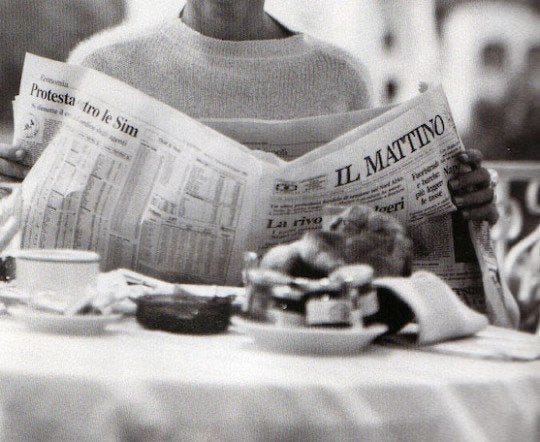
Whether reading, writing, or just sitting with a coffee and no real agenda, something about being alone in a busy café works. The surrounding hum, the people coming and going, the glimpses of other lives — it all creates just enough stimulation to focus and, oddly, to feel inspired
Vintage and antique stores
There is so much treasure from different time periods. Not all of it is good — but some of it is really, genuinely good. And this process of sifting and discovering is highly inspirational. You never know what era is going to speak to you until you’re holding a piece of it in your hands.
People with personal style
People who don’t look or dress like everyone else on the street. People with flair who are not afraid to express themselves by wearing original things, uninfluenced by influencers. There is something quietly radical about someone who has clearly developed their own visual language.
Traveling to cities
It might be an obvious one, and as much as I love traveling everywhere and find it fascinating, I feel truly inspired in big(ish) cities rather than in nature. There is just so much happening in a city and so much to explore — the architecture, the signage, the people, the storefronts. Cities are essentially one enormous mood board.
Gathering saves on IG and reviewing them later
I used to screenshot things I liked before saving was really a feature. Now I save and forget what I saved — but when I come back to my saves, it feels like my own personally curated feed, with no algorithm peeking in. It’s like finding a letter you wrote to yourself.
Rabbit hole of Substack Notes
I’m not sure what it is, but Notes are just so good right now. Whether it’s the virality or people genuinely putting in real effort, there is so much visually and literarily interesting content in digestible doses. It feels like the early internet in the best way.
Reading atmospheric novels
Books that transport you somewhere else entirely — think Donna Tartt, Patrick Süskind, Kazuo Ishiguro. Reading fiction that is atmospheric rather than just plot-driven opens up a different part of the brain. The world-building seeps in and suddenly you’re seeing your own work differently.
Design magazines
Browsing through design and interior design magazines just hits differently than scrolling through Instagram. There is something about the large print, the curation selected specifically for an issue, and the longer text explaining design choices that demands a slower, more intentional kind of looking.
Properly aged notebooks
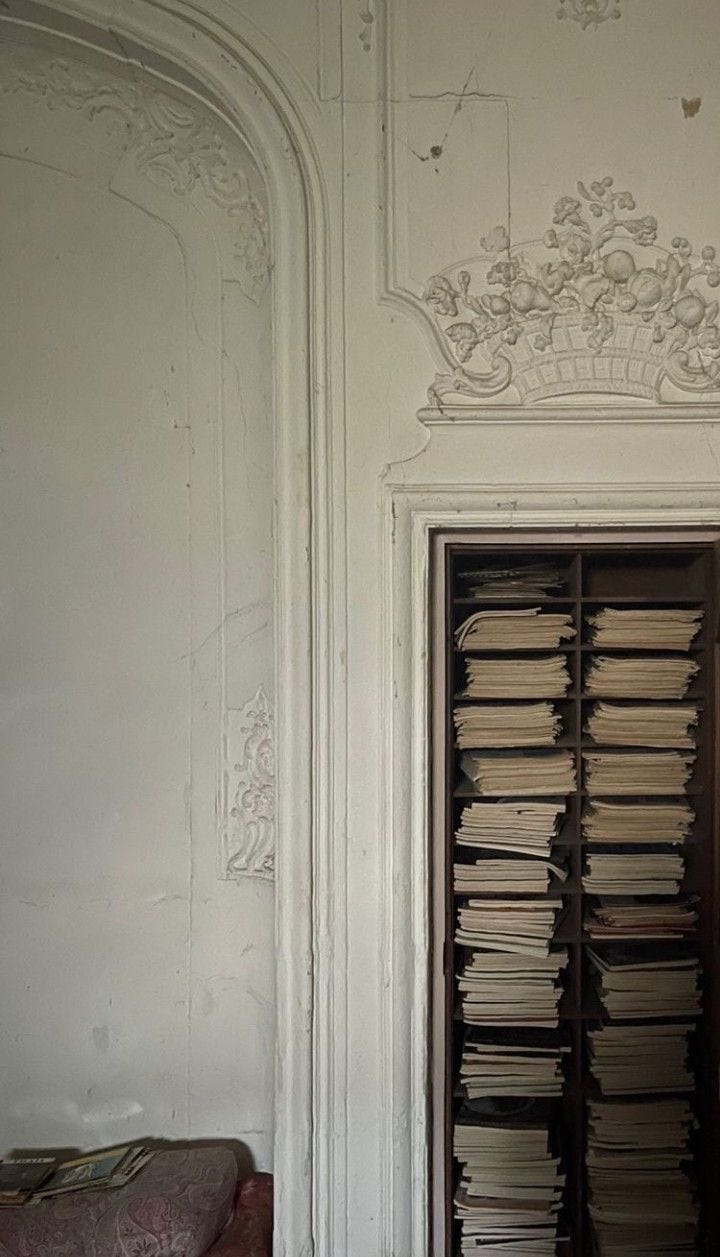
Imagine a heavy, personalised leather notebook — and when you open it, it’s like stepping into another person’s mind. The slightly stiff pages, the smell of old leather and ink. There is something about a notebook that has clearly been lived with that makes you want to fill your own pages with something worth keeping.
Browsing titles and covers in bookstores or libraries
I feel a little bad for books with unattractive covers, because the ones that get it right are genuinely thrilling. A great cover is a piece of design in itself — it promises something. Getting hooked by a cover and then reading the first line and being pulled in further is one of the small pleasures that never gets old.
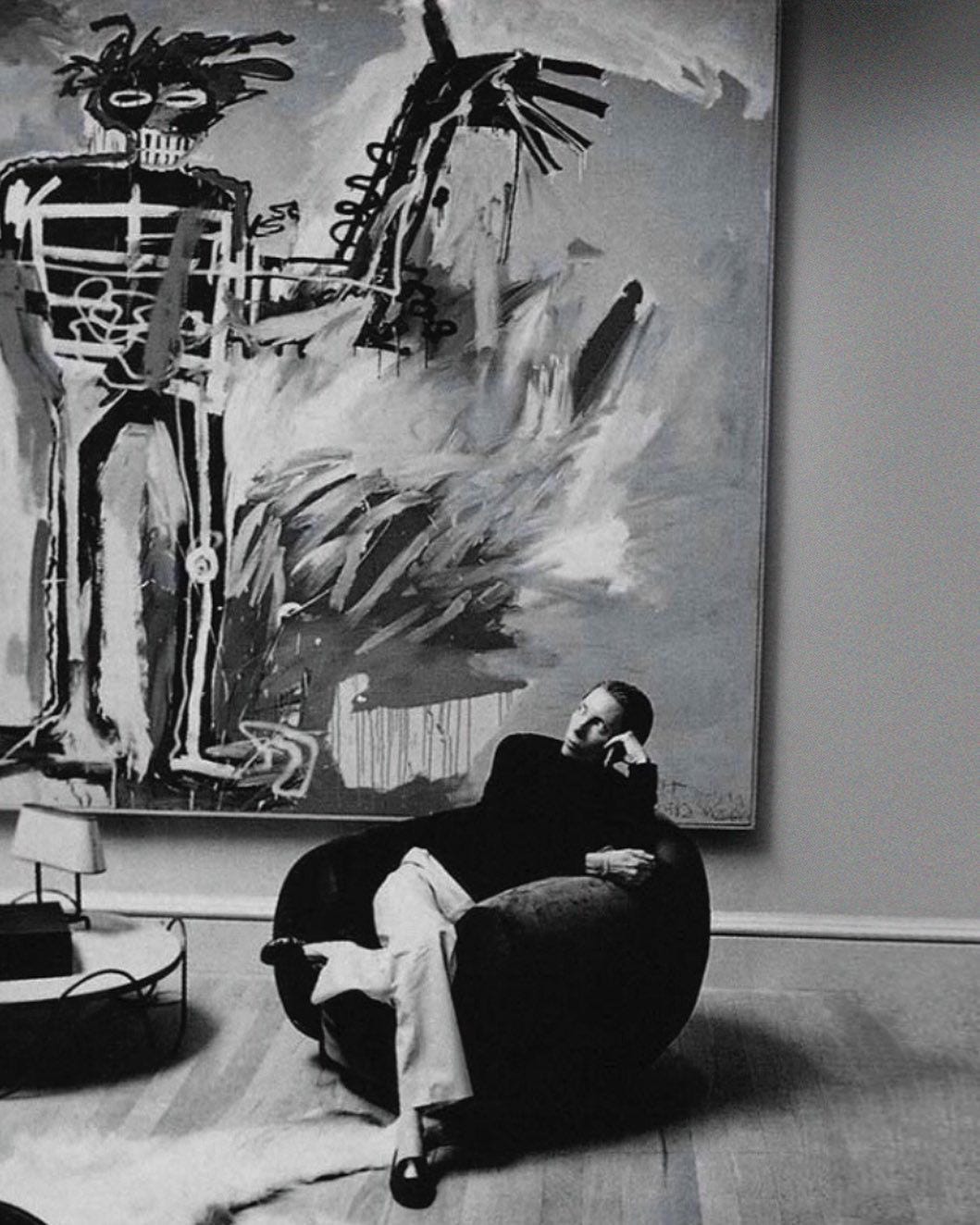
Visiting private art collections
Seeing what other people collect tells you so much about how they see the world. Unlike a museum, a private collection has a point of view — it’s personal, sometimes surprising, sometimes completely unexpected. And there is something about art in someone’s home, rather than on a white wall, that makes it feel newly alive.
Reading interviews with creatives
Learning how someone created what they created is endlessly fascinating and sets the mind thinking. Not the polished PR interview — but the ones where they talk about the actual mess of the process. The doubt, the wrong turns, the accidental discoveries.
Looking up pictures on Pinterest
Another rabbit hole, and one I fall into gladly. The difference between Pinterest and other platforms is that it rewards a specific kind of searching — you have to know roughly what you’re looking for, which means you end up somewhere both expected and unexpected at once.
Tasting cocktails and ready-to-drink drinks
This is visual and sensory at the same time. Exploring the taste as well as the branding and presentation — in the case of cocktails especially — is a genuinely multi-layered experience. A beautifully garnished drink or a cleverly labelled can is an act of design that you get to consume.